
.avif)

Join My Community
Join 10,000+ entrepreneurs receiving proven strategies and the best opportunities delivered straight to their inbox.

Happy Wednesday!
There’s a belief that runs deep in most people’s careers - that income is something you earn through personal effort, and that more income requires more effort.
I used to operate that way too, and for a long time, it felt like the only option.
It isn’t.


David and Shawn bought a $1.25M landscaping company in Northern Colorado as 50/50 partners and immediately faced drama.
The seller left after one month instead of six, his sons went behind their backs to undercut them with clients, and the family made the transition toxic.
Instead of giving up, they rebuilt.
They hired a phenomenal GM, doubled the staff, landed a major snow removal contract worth $175-225K for just 3 months of work, and are expanding into maintenance with a plan to triple their crews by spring.
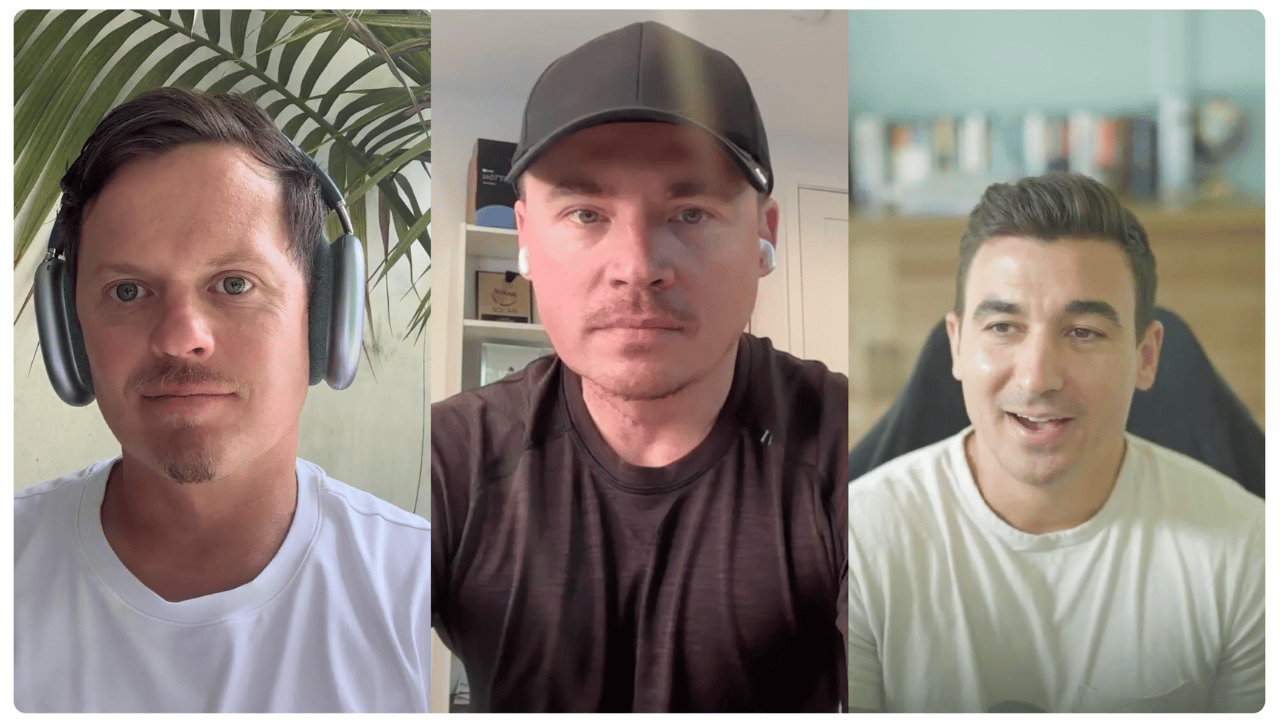
They went from firefighting family drama to building a scalable operation positioned for serious growth.
👉 Want to learn how to handle the ups and downs of acquiring your first business in the Acquisition Ace community? Book a call with our team here.
Two very different relationships with work
The traditional model most people follow looks like this: you show up, you do the work, you get paid.
Stop showing up, stop getting paid.
It’s a direct, linear exchange, and it has a hard ceiling.
There are only so many hours in a day, and your income can only grow as fast as your capacity to personally produce.
The alternative model looks different. Instead of you doing the work directly, you build or acquire systems that manage people who do the work - and those systems generate income whether or not you’re personally involved on any given day.
What I watched at JP Morgan
When I was working in financial services, I was surrounded by people who had built serious, lasting wealth.
And almost without exception, they weren’t trading their time for money anymore…
They owned things.
Businesses, systems, assets that generated cash flow independent of their daily involvement.
I wasn’t one of them yet, but I was watching closely.
That observation is a big part of what eventually pushed me toward acquisitions, where you’re stepping into businesses that already have customers, existing cash flow, and management structures capable of running without the previous owner.
(Inside Acquisition Ace, members learn how to identify businesses that already have these systems in place, so they’re not starting from zero. If you want to speed up acquiring your first business with help from the Acquisition Ace community, book a call with our team here.)
Why the traditional model feels safer than it is
The reason most people stay in the linear model is that it feels predictable.
You know what you’re going to make this week because you know how many hours you’re going to work.
But that predictability comes with a hidden fragility.
Your income is entirely contingent on your continued ability to show up and perform.
If your health changes, if your employer changes, if your industry changes - everything changes with it.
The systems model requires more upfront work to build.
But once it’s functioning correctly, the income doesn’t depend on your daily presence, and that’s a much more durable position.
On Thursday, I’ll share what this actually looks like in practice:
What my portfolio looks like today, and what a typical day actually looks like when the model is working the way it’s supposed to.
Most people who want this outcome spend years trying to figure it out alone.
The Acquisition Ace community exists to shorten that timeline, with coaches who’ve already done it, a network of people actively doing it, and a structured process that removes most of the guesswork.
👉 Book a call with my team here to hear how we can help you acquire your first business.
 | Onward, Ben Kelly PS: Check out our latest YouTube video. We reveal how one entrepreneur built a multi-million dollar pool company from scratch with no industry experience. |


